These efforts are in hopes to increase the number of Black golfers in the community, starting at a young age.
By Myles Manor

High schools in Guilford County with predominantly Black demographics are struggling to diversify their athletic programs. However, a new locally-led initiative is using golf to open new doors for minorities.
Dudley and Smith are the only two Greensboro high schools with predominantly Black golf teams. Currently, Smith has no girls golf team and a boys team with only three athletes. Despite their small numbers, Smith’s team fairs well in competition. Last school year, one boy qualified for regionals and the year before a girl qualified for states and regionals, said Smith golf coach Derrick Partee.
The trouble for these teams arises with recruiting athletes to play. Coaches say there is a lack of excitement surrounding golf among Black youth. This is the reason for the team’s lackluster participation, but a local nonprofit believes it has a solution.
First Tee-Central Carolina has partnered with Guilford County Schools to diversify the sport of golf. The program aims to introduce the game to Black elementary and middle school students and bring a new wave of athletes to Greensboro high schools.
The two organizations partnered to organize a “Golf Club” for elementary and middle school students at Gillespie Golf Course in Greensboro.
Gillespie has an impactful history in the Greensboro community. It served as a battleground for desegregation after six Black golfers sought to play there. Phillip Cook, Elijah Herring, Samuel Murray, George Simkins, Joseph Sturdivant and Leon Wolfe were told to leave when they began playing at what was then a whites-only course in 1955, according to a report in Triad Golf Today. The men — later dubbed “The Greensboro Six” — refused to be turned away and played anyway, leading to them being arrested and jailed. Later, the men appealed their case all the way to the U.S. Supreme Court but lost in a 5-4 decision. Years later, the course was ordered to desegregate and locals reacted by burning the clubhouse. However, the course reopened in 1962.
Inaugural class
Ten Guilford County Schools participated in the inaugural class with 54 students. The program provides participants with golf clubs, golf bags, team jerseys and a course to practice on, all for no cost.
The director of this new program was very enthusiastic to present the idea to schools across Guilford County.
“Golf has been really hard to access for these students for various reasons. Transportation, cost, and simple access to a course are just a few of the really big barriers,” said Ryan Wilson, executive director of First Tee-Central Carolina.
Less than 3% of the country’s almost 24 million recreational golfers are Black, according to The Ringer’s Lex Pryor.
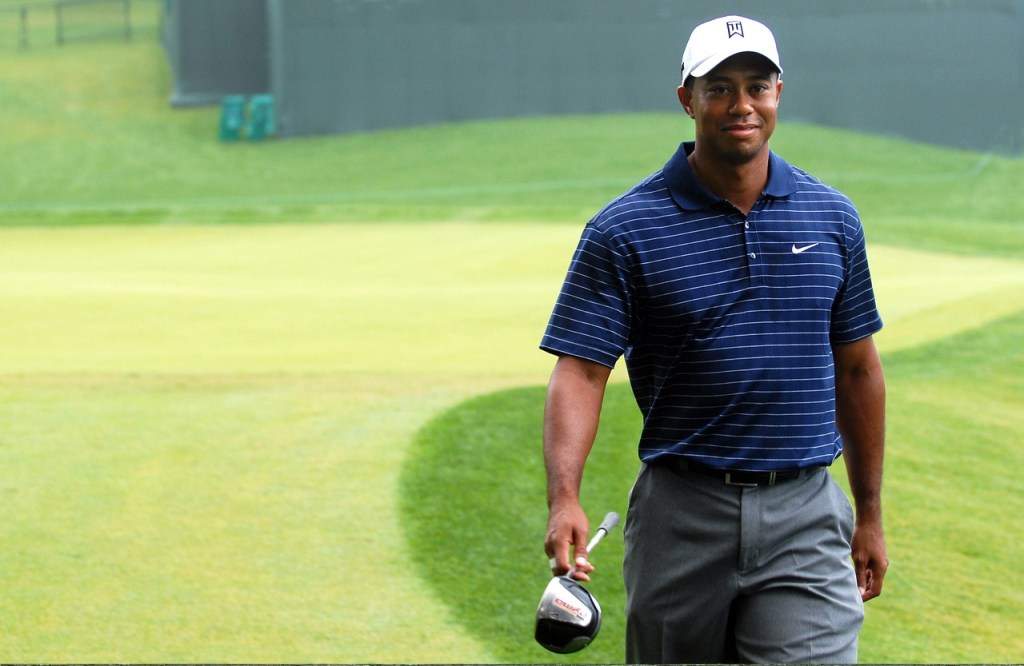
First Tee is making golf accessible locally by breaking down the barriers to reach a new demographic. By removing the cost barrier, the program allows kids who would have been overlooked by the community a chance to develop their natural talents.
“Access to the best coaching, best facilities, and best equipment is imperative to finding and ensuring consistent success for the program,” said Jaylon Wilson, a volunteer coach and N.C. A&T sophomore business major, who received an academic scholarship through the First Tee golf organization.
Previously, FTCC ran a program where children’s parents signed them up for paid private lessons at Gillespie. This approach failed to involve children whose parents were unfamiliar with golf or could not pay the coaching fees themselves. The new afterschool program model allows FTCC to involve parents and children directly through the local schools. This also allows schools that feed into Dudley and Smith to be more effectively involved in increasing the golfers at these high schools specifically.
Across the country, sports have created numerous opportunities for countless people by providing them with athletic scholarships, character development and various enrichment opportunities. Traditionally, football and basketball are sports that are encouraged in the Black community. As a result, for historically Black colleges and universities, the recruitment process of Black athletes for golf teams has been far from easy.
In the predominantly HBCU Mid-Atlantic Athletic Conference, only 40 percent of the male golfers are Black, according to Andscapes’ Michael Fletcher.
“It’s hard to find young, Black athletes to participate on collegiate teams, so [Black athletes] usually miss out on opportunities,” said Charles Penny II, Winston-Salem State University’s golf coach.
Golf isn’t the only professional sport suffering from low participation from Black athletes due to a lack of opportunities when they are younger. Major League Baseball has been working to improve the number of U.S.-born Black players on teams, Andscape reported last May. MLB teams are using programs like Reviving Baseball in Inner Cities and partnering with HBCUs to create a larger pipeline of talent. MLB is spending $150 million over 10 years to diversify the game.
Volunteer support
Penny and 12 other golfers from the area volunteer with the program to coach the participants. The use of local volunteers has helped promote the value of non-traditional sports like golf, which offer youth new experiences.
The program’s mission extends beyond golf.
“[Golf] teaches people about themselves and their emotions because it’s such a hard game to learn,” Wilson said.
At the concluding ceremony, all program participants received medals and scholarships to join the year round program offered by First Tee. The hope is that the kids will continue to learn about golf and learn to use it to better themselves.
In the midst of helping young athletes find themselves, the program faced some of its own growing pains along the way. From staffing shortages, to volunteer availability, to disconnect with the coaching methods that at times hindered the coaching process.
“There will be some tweaks to the program to enhance the experience,” Ryan Wilson said. “But we are excited to welcome back former athletes and bring in some new talent as well.”
Jaylon Wilson enjoyed his chance to give back as a volunteer coach.
“As a Black golfer, it was a rewarding experience to be able to pour into the next generation of kids just like me,” he said.
Myles Manor is a multimedia journalism student from Montgomery County, Maryland.
 Stories We Tell
Leave a comment